Saline Breast Implants in Westchester County, NY
A Trusted Choice for Customizable Breast Enhancement
Saline breast implants offer a well-established path with distinct practical advantages. Saline-filled breast implants appeal to a wide range of patients, from those who prioritize simple, visual implant monitoring to younger women exploring their options earlier in adulthood.
At the practice of John F. Farella, M.D., F.A.C.S., patients receive individualized consultations designed to match each person’s anatomy and goals with the right implant type. With offices in White Plains and Mt. Kisco, Dr. Farella brings decades of experience as a board-certified plastic surgeon to patients across Westchester County and the surrounding region.
Contact Us
How Saline Implants Work

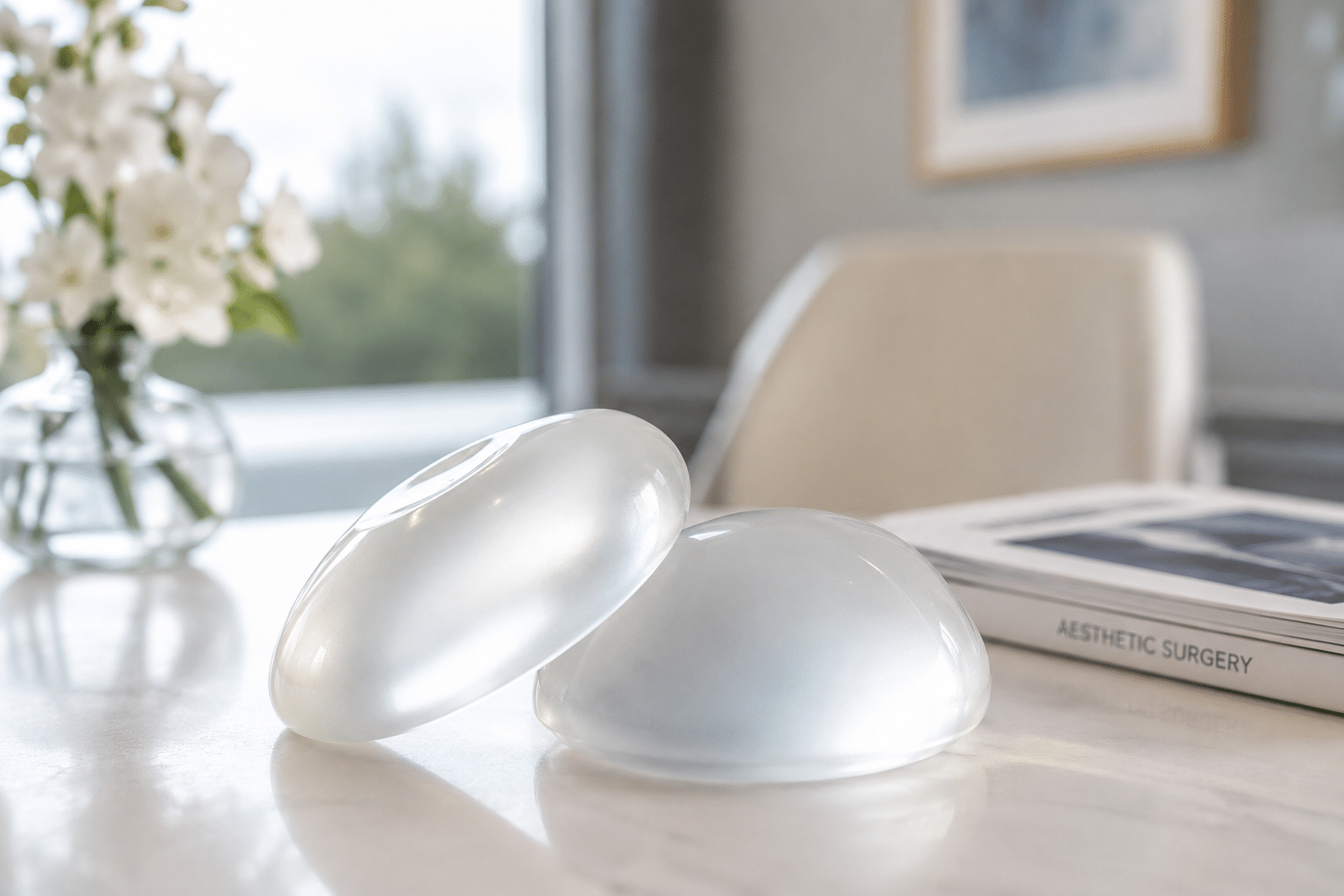
Saline breast implants are FDA-approved devices made up of a silicone implant shell that is surgically positioned before being filled with sterile saline solution. Unlike pre-filled silicone implants, saline-filled breast implants are filled after placement, allowing the surgeon to make precise volume adjustments during the procedure to refine the final result.
Saline implant for breast augmentation is approved for cosmetic use beginning at age 18. Available in a range of sizes and breast implant profiles, these implants offer meaningful flexibility for patients seeking different degrees of fullness and projection.
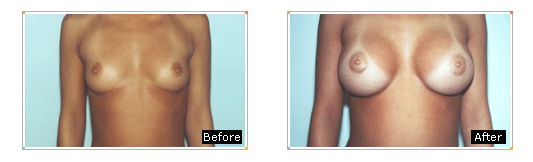
Breast Implant Before and After Gallery
Examining real patient before-and-after photography is a valuable step when considering breast augmentation. Looking at actual transformations offers clear insight into how factors like implant volume, contour, profile, and customized surgical strategy shape the final aesthetic.
Browse Dr. Farella’s online gallery to view authentic breast augmentation outcomes achieved for patients across the Westchester region.

See Full Breast Implant Photo Gallery
What Makes Saline Implants a Practical Choice
Patients researching trusted practices offering saline implants around Westchester County frequently cite several practical advantages that set this option apart.
Volume Can Be Tailored During Surgery
Adjustable implant volume is one of the most clinically useful features of saline implants. Because filling occurs during surgery, Dr. Farella can individually calibrate the volume of each implant, which supports better symmetry and a more refined outcome.
Ruptures Are Easy to Identify
One of the top benefits of saline implants concerns how a rupture presents. When an implant shell fails, the body safely absorbs the saline solution, and the affected side visibly loses volume. This makes saline implant monitoring far more straightforward than with silicone, where a rupture can go undetected without imaging.
Approved for Patients 18 and Older
Saline-filled breast implants carry FDA approval for cosmetic augmentation starting at age 18. This makes saline implant breast augmentation accessible to younger adults who are not yet eligible for silicone implants, which require patients to be at least 22.
Several Projection Levels Available
Saline breast implant options come in a range of breast implant profiles, from lower-profile designs that distribute volume broadly to higher-profile styles that create more defined forward fullness. This allows for meaningful customization based on each patient’s frame and preferences.
A Decades-Long Safety Record
Saline implants have been used successfully in breast augmentation for decades. When performed by a board-certified plastic surgeon like Dr. Farella at his practice in White Plains or Mt. Kisco, the procedure carries a well-supported record of breast implant safety.
Comparing Your Implant Options
Understanding the differences between saline vs. silicone implants can help you identify which features matter most to you before your consultation. While both implant types are widely used for breast augmentation, they differ in feel, monitoring requirements, and surgical considerations.
One of the most noticeable differences is implant feel. Silicone implants are often described as softer and more similar to natural breast tissue, while saline implants may feel slightly firmer, particularly in patients with thinner tissue coverage. Implant placement and individual anatomy can also influence the final feel and appearance.
Another consideration is breast implant rippling. Although rippling can occur with either implant type, it may be more visible with saline implants in some patients. Saline implants are also filled after placement, which can sometimes allow for a slightly smaller incision compared to pre-filled silicone implants.
Monitoring differs as well. Saline implant monitoring is generally straightforward because a rupture causes visible deflation. Silicone implants may require MRI or ultrasound imaging to evaluate whether the implant remains intact. During your consultation, Dr. Farella will explain these differences and help determine which implant option best aligns with your goals and anatomy.
Ideal Candidates for Saline Implants
Saline implants in Westchester County may be a strong fit for women who are at least 18, are in good general health, and have realistic expectations for their results. Patients who value visible rupture detection, want the option of adjustable implant volume during surgery, or are not yet eligible for silicone implants often find saline to be the right choice.
Physical factors such as tissue thickness, skin elasticity, chest width, and natural breast shape all play a role in candidacy. Dr. Farella conducts a thorough evaluation to identify which implant type, size, and breast implant profile will best support the patient’s long-term goals.
Choosing the Right Profile and Projection
Selecting an implant involves more than volume. Breast implant profiles determine how an implant sits against the chest and how much forward projection results. Lower-profile implants spread volume across a wider base for a gradual, natural-looking enhancement. Higher-profile implants push volume forward, creating more lift and upper-breast fullness.
The right profile depends on the patient’s chest dimensions, existing tissue, and aesthetic preferences. Dr. Farella uses careful measurements and surgical experience to recommend saline breast implant options that suit each patient’s proportions.
Hear From Dr. Farella’s Patients
“After meeting Dr. Farella in our initial appointment I was extremely impressed. He was extremely knowledgeable, and had a very caring, compassionate genuine side to him. He listens to all of my complaints of my breasts and the issues I was experiencing because of my dissatisfaction with how I felt physically. He was very reassuring pertaining to my needs and situation and went the extra mile to answer all my questions and concerns. After that meeting, I had complete trust that he was the best surgeon I could have ever possibly chosen for myself to do such an intimate surgery. My surgery went wonderful with no complications, and my results were astonishing.”– A Very Pleased Patient
Frequently Asked Questions About Saline Implants
In many cases, yes. Because saline-filled breast implants are filled during surgery, Dr. Farella can adjust the volume on each side independently to help correct mild differences in size.
Implant placement can be above or below the pectoral muscle, depending on the patient's anatomy and goals. Dr. Farella reviews the advantages of each position during the consultation.
Yes. Implant exchange surgery is an option for patients whose preferences evolve. Dr. Farella can explain what that process involves.
Saline implants are not considered lifetime devices, but many patients go years or even decades without requiring replacement. Dr. Farella discusses realistic longevity expectations during the consultation.
How Dr. Farella Evaluates Saline Implant Options
John F. Farella, M.D., F.A.C.S., is certified by the American Board of Plastic and Reconstructive Surgery and has spent more than four decades performing aesthetic procedures. He approaches saline implant breast augmentation with a focus on proportion, natural-looking outcomes, and each patient’s individual anatomy.
Consultations at the White Plains and Mt. Kisco offices include a detailed review of chest dimensions, tissue quality, skin laxity, and breast shape. From there, Dr. Farella recommends an implant type, profile, and placement plan personalized to produce balanced, long-lasting results.
Book Your Consultation Saline Breast Implants in Westchester County, NY
If you are considering saline implants in Westchester County, the next step is a personal consultation with John Farella, M.D., F.A.C.S. His team is available at the White Plains and Mt. Kisco offices. Contact the practice today to schedule your visit.
Schedule a Consultation
Related Procedures